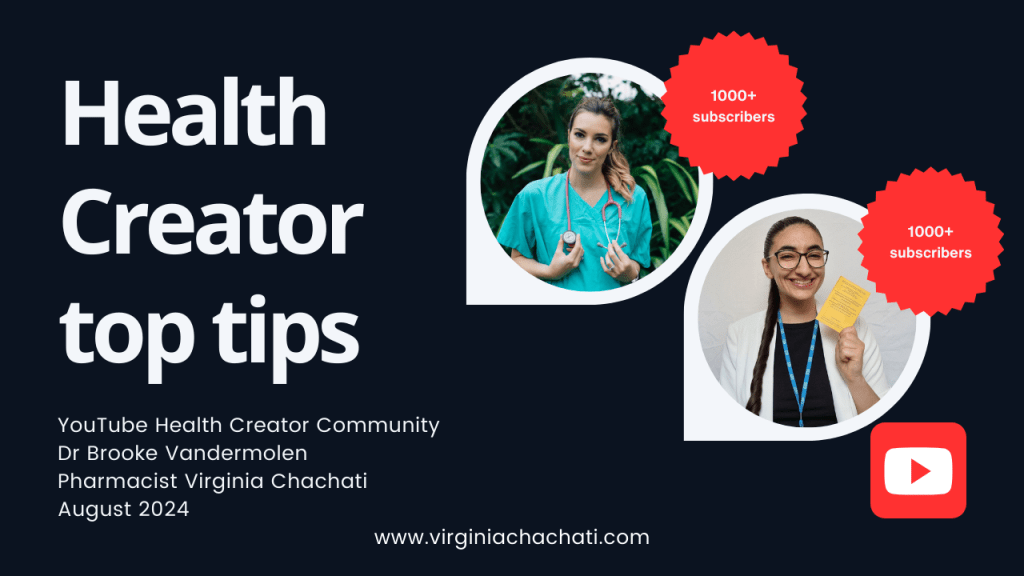
I attended (and presented at) the fourth YouTube Health Creator Community session on 27 August 2024. Here are some YouTube updates and key learning points from Dr Brooke Vandermolen and Pharmacist Virginia Chachati (me!)
Dr Vishaal Virani, Head of Health and YouTube UK and Ireland gave a few updates and highlights:
- YouTube Kids is for 0 to 12 year olds, which is a separate platform to the “regular” YouTube platform, there are more restrictions to what goes on there
- There’s not much health content on there – which is an opportunity for creators
- You can set up a new channel made for kids with 20 videos and submit for approval, or submit a specific video
- Jo Morton-Brown has created a YouTube Kids channel and has a regular YouTube channel too
- Check out Colin and Samir’s top tips from their video 13 Years of YouTube knowledge in 46 minutes
- Vishaal is keen to find out your feedback on the YouTube Health Creator Community
Key takeaways from Pharmacist Virginia Chachati’s presentation
Click here to flick through Virginia’s slide deck
Who is Pharmacist Virginia?
- Medical copywriter – I write health information and try to be as persuasive as possible
- Video coach and deliver workshops about creating videos
- PIF TICK assessor – assess health information creators
- PIF TICK certified – I took part in the pilot before joining PIF to be one of the first individuals to get PIF TICK certified and become a Trusted Information Creator
- NHS.UK evidence checker – I check health information on the NHS.UK website is evidence based
- YouTube channel Pharmacist Virginia
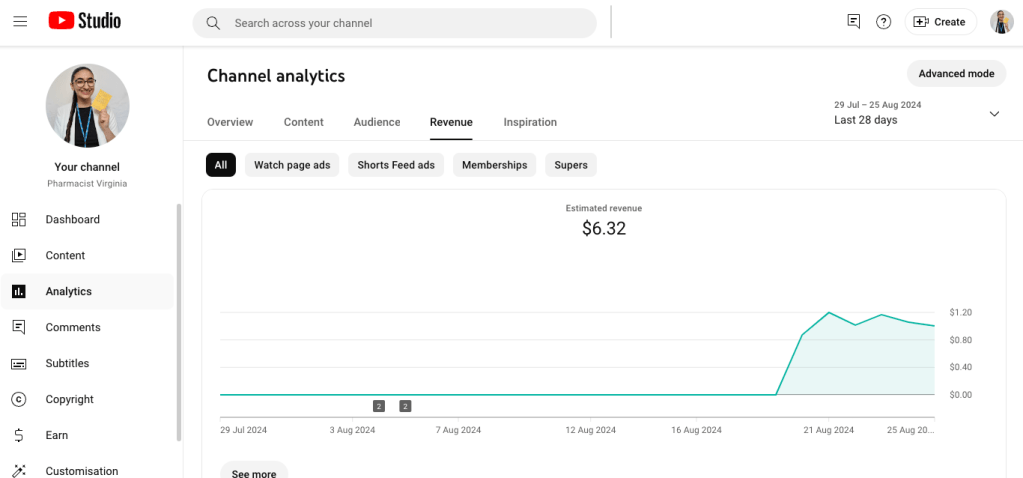
Pharmacist Virginia recently got monetised
- Earn money from adverts shown on videos
- Calls it YouTube chocolate fund
- Feels great to be rewarded on top of producing travel health information I’m really passionate about
- Keep in mind YouTube hosts all your videos for FREE
Pharmacist Virginia’s 10 top tips to create YouTube health videos
Whether videos get monetised or not it’s still really helpful to create health information videos for patients or family and friends.
- Use visual hooks – it helps people know what to expect so they are more likely to watch – such as what you are wearing, text on screen that says the topic of the video
- Create videos around 1 single topic to make a series, which can become a playlist – easier to create videos, it’s more searchable and people watch multiple videos about the same topic on one channel
- YouTube Studio inspiration tab helps you find content gaps to fill, including videos that are health information but without a health expert or are just plain misinformation!
- Create a process that you can repeat and change it if it stops working – focus on making more videos so they get easier to make and it’s more sustainable
- Always write a script so you don’t say anything wrong – read it out loud before you record – it will save you hundreds of hours – otherwise you will do multiple takes, your voice hurts, and you will get frustrated and quit. Practise what words you want to emphasise.
- Collaborate with subject matter experts – I invited Dr Hannah Lock to talk about high altitude risks.
- Keep your setup and editing simple so you’re more likely to film. I do not have a static setup as I film in my bedroom, so I write multiple scripts then film them all in one session (batch production).
- Be inclusive – think about how diverse your audience is. Not to throw shade, but an observation, a popular doctor channel created a video about skin conditions and only used light coloured skin images, and people in the comments section did notice it was not inclusive.
- Include your sources in the description – this is great for search engine optimisation (SEO) so keep this in mind as YouTube is a search engine – it’s also great for credibility.
- Key questions I think about: Is the video searchable? Would I give the video link to a patient to watch it?
Pharmacist Virginia’s content creation process
- Find a content gap or add to an existing series, such as yellow fever. If you have a video that is getting lots of views and comments, it’s a clear sign people want to learn more about that topic specifically from you.
- Look at what is already on YouTube – there is no point making the same thing twice.
- Think about this: Can I make it better? Can I update the information? Can I bust misinformation?
- Create the thumbnail before you film so it’s eye-catching and clickable.
- Research, write, get feedback, edit, practice script.
- Set up filming space – light, mic, selfie camera on my phone
- Film with teleprompter PromptSmart
- Edit video: check and edit subtitles first, add images or b-roll or supporting text
- Upload to YouTube, add description, add SRT file for subtitles
- Press publish and respond to/monitor comments
When I create a video for YouTube I want it to last forever. There is a sense of delayed gratification on YouTube where you might not get many views upfront, but you will over time.
Virginia’s video coaching and workshops
I do video coaching for doctors to help them create videos for their patients to:
- Answer questions patients are too embarrassed to ask, or didn’t think of at the time
- Save time in the consultation room
- Provide visual explanations and reassurance, including for patients on waiting lists
- Reduce “did not attend” appointments and improve the overall patient care journey
- Share expertise to build trust with patients and document surgery to help train future healthcare professionals
- Leave behind a lasting legacy
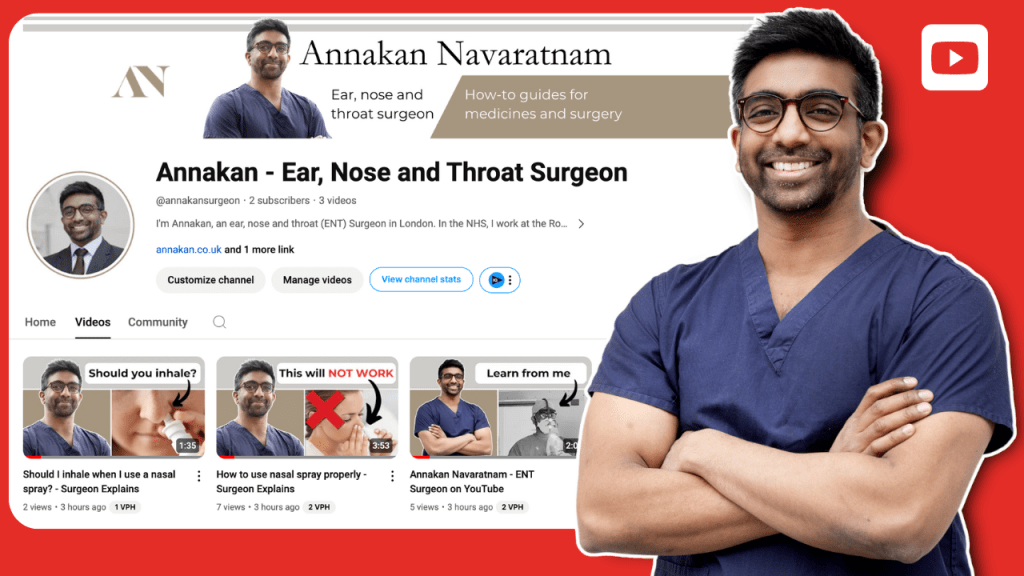
I do video workshops for businesses to help them:
- Share health information from research for public benefit
- Create videos at low cost (you do not need to buy equipment for £14,000 to get started!)
- Get better at presenting health information on camera and at webinars/speaking events
- Make a difference in the world
- Fight against misinformation
What is the Patient Information Forum (PIF)?
- Community of health information creators
- They create print and digital health information (such as printed leaflets, blogs, videos)
- PIF created the gold standard PIF TICK criteria for creating evidence-based health information that is easy to understand, accessible and is regularly reviewed
- The NHS uses PIF TICK criteria as a framework, as do YouTube Health for the requirements to get on the YouTube Health shelf, and the Academy of Medical Royal Colleges says if you are PIF TICK certified then you meet YouTube Health shelf requirements.
- The WHO included PIF as a case study in its Infodemic project, as there is too much information out there, including misinformation, and the PIF TICK (the Trusted Information Creator logo) is a way to find trusted evidence-based health information
- They produce resources and run workshops to help you learn how to create health information
- There are 130 PIF TICK certified trusted health information creators, within the PIF TICK Directory
- The PIF TICK helps you make sure you create evidence-based health information that is easy to understand and regularly reviewed
- There are 10 PIF TICK criteria you can view them here
- Check out the PIF YouTube channel for videos on how to spot health misinformation and how to write accessible health information
Key takeaways from Dr Brooke Vandermolen’s presentation
Who is Dr Brooke Vandermolen?
- Clinician content creator for about 6 years, started on Instagram/TikTok
- Content about women’s health
- Obstetrics and gynaecology doctor
- Work as a registrar in UK in London
- Dr Brooke Vandermolen’s YouTube channel, The OBGYN mum
Content creation is a journey, and the more you do the more you learn about yourself and the value it brings to you as well as others.
Why should you create content as a clinician?
- People do turn to the internet to get information
- I want women to have access to evidence-based health information
- You only have a few minutes to talk about complex topics in consultations, so on video you have an opportunity to do a deeper dive
- In a full day of clinic I see 20 or 30 people, but with a video you can reach 50 to 100,000 people, so there’s a potential to have a bigger impact
- I have been building my YouTube for 9 months, and it is worth putting in the effort over time
- I am seeing more benefit in creating long form vs short form videos – I find I enjoy it much more so I can say more on topics
- I do post videos on TikTok, Instagram, have a blog, and do journalism (articles, radio), working with brands, speaking engagements, advisory roles (such as product development), user generated content (UGC), private antenatal classes (I advertised through social media)
- I have 3 kids and work 4 days a week in the NHS
How can you protect yourself as a health creator?
I am not an expert – this is my experience and how I understand it and how I protect myself.
- Check out the GMC guidance for social media and BMA social media guidance
- Key points: do not bully or harrass anyone, aware of patient confidentiality, be open about any conflicts of interest, and be aware of the limits of your competency
- No guidance on brand deals and how to talk about medicines
(Virginia Chachati suggests looking at ABPI guidelines, GPhC, BNF, PAGB, MHRA and PMCPA for anything to do with medicines) - Look at the ASA (Advertising Standards Authority) guidelines – you must state clearly an ad is an ad (otherwise they can bring a case against you)
- Guidance says you should not give personal advice to avoid negligence claims
- Make it clear you do not offer personal advice and that they need to see their personal doctor for advice
- Need to have clear boundaries
- MDU will not cover social media or public work – but you need this medical indemnity insurance for patient doctor relationships
- You can get indemnity to avoid the risk of someone suing you for something you say, and protect you for reputational damage, or claims if anything happens to someone as a result of your content, brand contracts
- It’s good to have business insurance
- I used a broker – mention Dr Brooke Vandermolen – they are called InSync – for content creator insurance policies
Opportunities for income as a health creator
- Give expert opinion
- Use medical writing
- Ad revenue from YouTube content
- Paid to write press releases or look at promotional content for brands
- Speaking engagements and panel appearances
- Social media work
- Sponsored posts
- Affiliate links (when you get a kickback from someone buying something from your link)
- Set up a business or have your own line of products
- Write a book
Halo effect of health creators
- When a brand brings on board a health creator and promote a product, the halo effect is they have someone credible promoting their product so they do not have to do any research or prove anything
- For me, I would never promote vitamins or supplements – I do not know if they claims they are making stand up. No randomised controlled trials or NHS recommendations.
Dr Brooke’s top tips for social media
- Be clear who you are
- Always use reputable sources
- Take your time – don’t rush as you can make mistakes and get called out over it
- If you work with a brand, you have to declare them at every opportunity as a conflict of interest – for infinity and beyond! Are you comfortable with being linked to them? Your name might benefit them more than it benefits you.
- Check your contracts carefully
- Think about where you film – do not post when your NHS employer is paying you (during work hours)
- I avoid filming in the clinic otherwise it might look like it’s content for your clinic (everyone is different – I do wear scrubs to show that I am a clinician when you are scrolling on the video feed)
- Some people are not aware of content scheduling and that when you post might not be your current location (such as posts that are scheduled to go out during work hours)
Thank you for reading 🙂
Follow Virginia Chachati on LinkedIn
 Virginia Chachati
Leave a comment